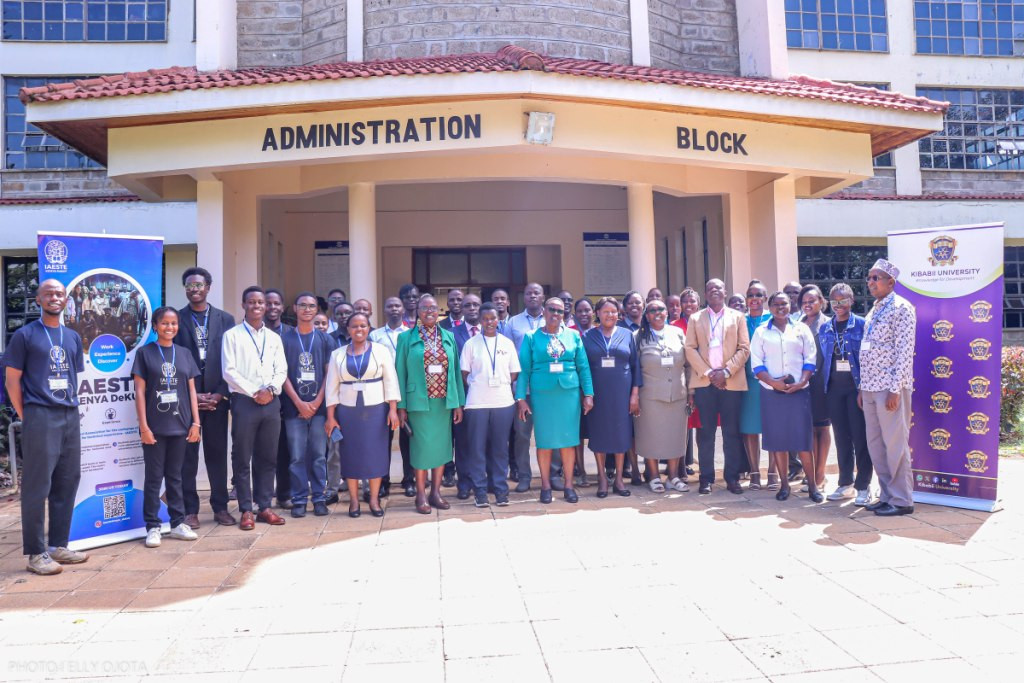
Kibabii University hosted the Annual General Meeting of the International Association for the Exchange of Students for Technical Experience (IAESTE) on Friday 16th May, 2025. The event brought together stakeholders from various academic universities, including Umma University, Rongo University. Also in attendance were representatives from Egerton University, Maasai Mara University, Murang’a University, Karatina University, and the Technical University of Kenya.
IAESTE is a global, non-profit organization that facilitates paid international internships, primarily in STEM fields. Operating in more than 100 countries, IAESTE is recognized by the United Nations Economic and Social Council (ECOSOC) and UNESCO, and it plays a vital role in nurturing students through technical and intercultural exchange opportunities. These experiences not only enhance students’ professional competencies but also equip them with valuable cross-cultural skills.
The event was officially opened by Dr. Paul Obino, Director of Partnerships and Linkages, who represented the Deputy Vice Chancellor (Planning, Partnerships, Research, and Innovation) Prof. Julius Maiyo. In his opening remarks, Dr. Obino emphasized the University’s growing commitment to internationalization and its strategic role in preparing students for a competitive global environment.
Participants used the opportunity to reflect on IAESTE’s mission of enriching student experiences through international exchange. Among the key milestones reported during the meeting were the successful registration of the IAESTE program in Kenya, improved quality in student nominations, and increased engagement through social media. These achievements highlight the program’s growing influence and operational progress.
The event also brought to light several persistent challenges. These include a reluctance among some students to accept internship offers, applications from ineligible graduates, poor placement matches for Kenyan students, last-minute offer cancellations, rejections by host countries, limited corporate participation, and financial limitations. Addressing these issues remains central to the success of the IAESTE mission in Kenya with delegates rallying calls for enhanced collaboration, institutional support, and broader awareness campaigns to strengthen the program’s reach and impact.